MHS Book Group: Making Sense of the American Civil War

For all you Civil War buffs, here’s a great reading group to join in the new year!

MHS Book Group: Making Sense of the American Civil War

Tuesday, January 21 – Tuesday, May 20, 2014
Presented in partnership with Maine Humanities Council

Facilitator: Candace Kanes, MHS Historian and Maine Memory Network Curator

Join us this January through May for our fifth annual MHS reading group–a great opportunity to engage in discussions about history and connect with members of the MHS community.

Created and funded by the National Endowment for the Humanities as part of its We the People initiative, “Making Sense of the Civil War” is a Maine Humanities Council “Let’s Talk About It” program designed as a succession of five conversations exploring different facets of the Civil War experience. Each session will explore a different topic informed by reading the words written or spoken by powerful voices from the past and present.

Books will be provided on loan by Maine Humanities Council and include March by Geraldine Brooks, Crossroads of Freedom: Antietam by James McPherson, and America’s War, an anthology published by the NEH expressly for this series. There is no charge for this year’s group.

WHEN: Tuesdays 1/21, 2/18, 3/18, 4/15, 5/20 @ 6:30PM
WHERE: MHS Lecture Hall
BOOKS: On loan from Maine Humanities Council
REGISTRATION DEADLINE: Friday, January 10. Registration is required; space is limited and the group has traditionally filled up fast. To sign up, Download the Flyer, call 774-1822, or email info@mainehistory.org with “book group” in the subject heading.

Winter Harbor

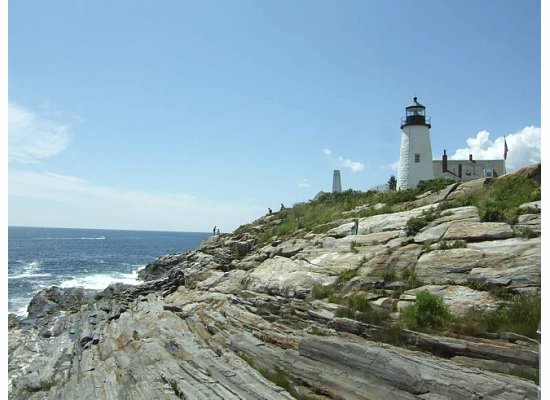
Pemaquid LighthouseI tend to gravitate towards books written in the 1940s and 1950s, such as Daphne Du Maurier’s books, and the Bennett Island Trilogy by Maine author Elisabeth Ogilvie. I recently read another book from this period, a non-fiction book by another Maine author, Bernice “Bunny” Richmond: “Winter Harbor.” This book has been on my bookshelf at home for many years before we bought the house in 1996, as evidenced by the silverfish eaten cover. Published in 1943 the book tells the tale of Bernice and her husband Reg buying a lighthouse from the U.S. government, and then enjoying their summers on the island where it is located, Mark Island. Bunny starts the book:

“Reg and I are little people. No one ever heard of us, we have no names, we have no wealth, yet something wonderful, exciting and full of adventure happened to us.” Reg inherited $1500 and said to his wife, “Well, Bunny, what would you like to do with fifteen hundred dollars?” Her answer? “I want a lighthouse on the Maine coast.”

Throughout the book you can feel Bunny’s complete joy of exploring Mark Island, where the lighthouse is located, near Schoodic Peninsula down east. So, if you’ve ever dreamt of living in a lighthouse, this is the book for you! (and you can find the book in our very own island library)

[Photo not of Winter Harbor Lighthouse, but of Pemaquid Lighthouse]

World religions reading list

BenedictionsAt this time of year, when we celebrate Hanukah and Christmas, it may be a time to remember how various religions celebrate their holidays. It brings to mind a reading list about world religions that we circulated at the Long Island Community Library a few years ago, when several of us did a study at the Evergreen United Methodist Church. The readings on this list came from not only our study group, but community members.

Non-fiction:

Hirsi Ali, Ayaan. Infidel / Ayaan Hirsi Ali. New York : Free Press, 2007.

In this profoundly affecting memoir from the internationally renowned author of The Caged Virgin, Ayaan Hirsi Ali tells her astonishing life story, from her traditional Muslim childhood in Somalia, Saudi Arabia, and Kenya, to her intellectual awakening and activism in the Netherlands, and her current life under armed guard in the West.

Mahoney, Rosemary. The singular pilgrim: travels on sacred ground / Rosemary Mahoney. Boston : Houghton Mifflin, 2003.

The intrepid Rosemary Mahoney undertakes six extraordinary journeys: visiting an Anglican shrine to Saint Mary in Walsingham, England; walking the five-hundred-mile Camino de Santiago in northern Spain; braving the icy bathwater at Lourdes; rowing alone across the Sea of Galilee to spend a night camped below the Golan Heights; viewing Varanasi, India’s holiest city, from a rubber raft on the Ganges; soldiering barefoot through the three-day penitential Catholic pilgrimage on Ireland’s Station Island.

Coffin, Jaed. A chant to soothe wild elephants : a memoir / Jaed Coffin. Cambridge, Mass. : Da Capo, 2008.

This memoir, by Maine resident Jaed Coffin, is about his experience as a young Buddhist monk in Thailand.

Idliby, Ranya. The faith club : a Muslim, a Christian, a Jew– three  women search for understanding / Ranya Idliby, Suzanne Oliver, Priscilla Warner.

Traces how three American women of different faiths worked together to understand one another while identifying the connections between Judaism, Christianity, and Islam,  during which they openly discussed the issues that divided them.

Siljander, Mark. A deadly misunderstanding : a congressman’s quest to bridge the Muslim-Christian divide / Mark D. Siljander ; with John David Mann ; foreword by Ban Ki-moon. New York : HarperOne, 2008.

“A book of enormous courage and spiritual power … essential reading for every Christian, Muslim and Jew of good will around the world. – The Washington Times


Fiction:

Aboulela, Leila. The translator / Leila Aboulela. New York : Grove Press, 2006.

The Translator is a beautifully written story about a young Sudanese widow living in Scotland and her sprouting relationship with Islamic scholar Rae Isle.

Jiji, Jessica. Sweet dates in Basra / Jessica Jiji. New York : Avon, 2010.

After two Iraqi families, one Jewish and one Muslim, break through a wall in the 1930s to accommodate a shared water pipe, a Jewish boy falls in love with an Arab maid, whose mother is determined to preserve her daughter’s honor in a land where the loss of it can be punishable by death.

Potok, Chaim. The Chosen : a novel / Chaim Potok. New York : Simon and Schuster, 1967. A novel about a Jewish family living in the Williamsburg section of Brooklyn in the 1940’s.

Said, Kurban. Ali and Nino : a love story / Kurban Said. New York : Anchor Books, 2000.

A love story of two childhood friends, a Muslim warrior and a Christian girl, during the Russian Revolution. Set on the Caspian Sea, the novel symbolizes the clash of cultures between East and West. It was first published in German in 1937.

Happy holidays to everyone, no matter how you celebrate!

Common themes in books, or, 6 degrees of separation

Do you ever read a book that reminds you of another book, by a common theme running throughout it? This happens to me from time to time. For example, the orphan theme. “The language of flowers” by Vanessa Diffenbaugh is a lyrical story about an young girl who is in and out of foster care and group homes until she finds her home as an adult in the language of flowers and the community she finds there. Likewise, “Orphan Train” by Christina Baker Kline, is about an orphan who makes her way from the tenements of New York City to the Midwest, where she is eventually adopted, and then back to the coast of Maine, where she has a teenage girl, also in and out of the foster care system, helping her clean out her house. This links to another book I just read, “The unexpected forest : a novel” by Eleanor Lincoln Morse, a Peaks Island author, which includes a young woman who helps an older woman clean out her house on Vinalhaven Island, Maine. There is a white dog which appears in this book, as well as in a more recent book by Morse, entitled “White Dog fell from the sky,” which takes place in Botswana. Which reminds me of a book I read earlier this year: Carolyn Slaughter’s “Dreams of the Kalahari,” a novel which also takes place in Botswana.house tour 2013 #147

I usually have a fiction and non-fiction book going at the same time, and often there are common themes within these two books. I don’t plan it that way – it just appears. Nancy J., in a blog written a year ago, wrote about a common theme of death that appeared coincidentally in some of the books she was reading.

Anyone out there have any other examples of finding themes in books, unexpectedly?

Another classic weekend to brighten your winter

The Maine Humanities Council presents

WINTER WEEKEND 2014: Crime and Punishment by Fyodor Dostoevskyconservation area January 2011

Looking to brush up on your Russian literature? Join the Maine Humanities Council to enter Dostoevsky’s dark world of moral conflict during the 2014 Winter Weekend, March 7-8 at Bowdoin College.

Winter Weekend offers an engaging humanities experience by uniting historians, writers, artists, public intellectuals, and others to help us understand each year’s book in its rich historical and cultural context.

Registration includes a copy of the novel, a dinner inspired by the novel, and lectures by noted scholars. Friday features dinner and a keynote address, Saturday includes various lectures and lunch. Sign up soon; this event often has a waiting list!

For more information and to register, please visit the Maine Humanities Council website:   http://mainehumanities.org/programs/2014.html

Maine Readers’ Choice Award

The Maine Readers’ Choice Award Committee is pleased to announce the winner for the inaugural Maine Readers’ Choice Award. The 2013 Award recipient is Wiley Cash for his debut novel, A Land More Kind Than Home. The other finalists were Gillian Flynn’s Gone Girl and The Yellow Birds by Kevin Powershomeslide3-wiley

The award is for the best in adult fiction published in the United States – the finalists were voted on by Maine readers.

Our wonderful island library has all three of these books, so come on down to see if you agree with your fellow Mainers.

For more information on the award see:

http://mainereaderschoiceaward.org/


1924 tax records for Long Island – available for research!

Word is out – the 1924 tax records, owned by the City of Portland, are now available for research! Just go to the site (available through the Maine Memory Network, a site of the Maine Historical Society) to find your house or favorite building on Long Island:

http://www.mainememory.net/search/ptr

Probably the best way to see them all is to type in “Long Island” into the keyword search box.

You can limit the search by street address, owner, etc.

You will be able to see a picture of the building, as well as other information.

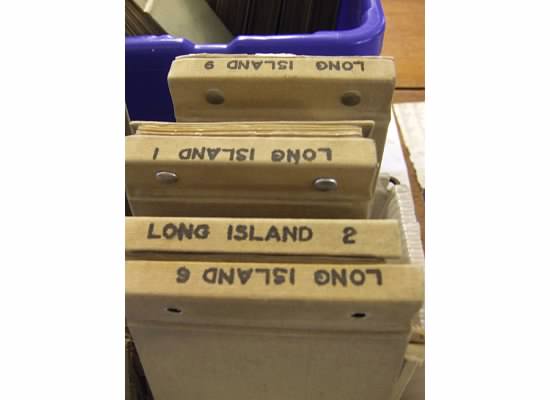
The Portland, Maine, 1924 Tax Records were created as part of a city-wide tax reevaluation.   The 2 3/4″ x 4″ original black and white photographs provide extraordinary documentation of the appearance and condition of every taxable property in the city at that time. The accompanying tax forms provide equally valuable information, including the use of the property, the original building materials and finishes and the property’s assessed value as of 1924. On the back of each form, a pencil sketch illustrates the size and shape of the building footprint on the property.

The collection consists of 131 books containing approximately 30,000 pages, each page recording a single property (properties with more than one building will generally have a page for each building).  The records were kept in a cabinet in the Portland tax assessor’s office in City Hall until 2009.1924 tax record project 6

Having these records available online has created quite a buzz all over Portland and Casco Bay, and great fun for researching houses, although some are no longer or unrecognizable.

This was a joint project between the City of Portland, the Portland Public Library, and the Maine Historical Society.

East of the Hague Line

Last month Gordon Holmes came to the Long Island Learning Center to talk about, and read from, his new book, “East of the Hague Line,” a novel which “takes a close, personal look at what it takes to live the life of an offshore fisherman.” Given the enthusiasm of the crowd, it appears to be a great read, and a page turner, despite the over 600 pages. I still haven’t read it, but armed by the excitement I felt that evening at the reading, I set forth to spread the word amongst my fellow librarians in Maine, by way of the Me-Libs listserve. I also e-mailed our museum store manager, Melissa, and the library director, Nick. I’m pleased to say, that while the libraries still don’t seem to be jumping on board, the Maine Historical Society museum store now carries copies of the book – actually, they not only carry the book but feature it front and center, as you can see from this picture. And I just catalogued a copy for the Maine Historical Society Library. East of the Hague Line

One of these days I will read the book for myself… (sounds like a perfect book to curl up with, mid-winter, with a storm raging outside…)

Ode to magazines

It’s not enough that I check out books from several libraries, as well as pick up books at used book sales, we also subscribe to many magazines (can’t help it!). There are boating magazines (even though our boat has been in the yard for several years) such as Cruising World and Sail Magazine, travel magazines (even though we don’t travel as often as I’d like) such as National Geographic Traveler and Afar, woodworking magazines (Michael’s favorite is American Woodworking), and home/decorating magazines (Country Living and English Home). Some are nostalgic for me. My mother subscribes to Threads for me, a knitting magazine. I will never be able to make anything in it as the patterns are way beyond my abilities, but I love to just look at the pictures (I can almost feel the yarn between my fingers) and think of my mother, an expert knitter. She also used to subscribe to Cooks Illustrated for Michael, knowing his love of cooking. I love Arizona Highways, which my father (whose birthday is today) first subscribed to for me, along with Alaska magazine. Several years ago my sister and I were in the Arizona Highways gift shop and she resubscribed for me, as an early birthday present. In contrast, I receive the local magazines Maine and Maine Home + Design, as freebies through work. I also can’t resist a good deal, such as Yankee Magazine and Smithsonian, which I subscribed to for about $10. National Geographic, which my husband has been receiving since he was a child, used to be a real bargain, but the prices have increased so much that I had to stop subscribing, to my sadness. However, a few months after dropping it, I received an offer I couldn’t resist, so I resubscribed at a lesser rate. Sometimes we’ll get free subscriptions through various offers, which explains why magazines such as “Inc” or “GQ” land in our mailbox. Long Island garden tour 2012 - Jacqui's porch

What are some of your favorite magazines, to read or subscribe to?

A Garden of Books – Bloomed!

Our book sale was a great success, thanks to the community who came out on a hot sticky day to buy books! Gratifying to see that the printed word is still an attraction, in this day and age of the digital world we live in. Those lucky enough to buy $20 worth of books received a beautiful bouquet from our gardening librarian’s garden. And those smart enough to come after 2 p.m. walked away with a bag of books for a buck, the best deal around. Most of the unsold books were sent off to Goodwill, but we saved a sampling, which will appear at our regular book sale. So, if you missed out on Saturday, stop by and see what we have saved for you.LICL booksale flowers

A small library on an island on the coast of Maine