The delicious taste of food memoirs

One of my favorite literature genres is food memoirs. Who can resist Ruth Reichl’s Tender at the Bone: Growing up at the Table or Julia Child’s My Life in France? (or any memoirs by Reichl or Child – all are delicious!). Speaking of Julia Child, I recently read Judith Jones’ memoir The Tenth Muse: My Life in Food. Judith, a food editor who lived for many years in France after World War II,  championed Julia Child’s Mastering the Art of French Cooking. Many food memoirs take place in France, including another wonderful book I’ve written about in the past: Bonjour Kale: a Memoir of Paris, Love, and Recipes, by Kristen Beddard. There’s definitely a strong connection between France and food. 


I am reminded of food memoirs by other chefs, such as Blood, Bones & Butter: The Inadvertent Education of a Reluctant Chef, by Gabrielle Hamilton, and Dalia Jurgensen’s Spiced: a Pastry Chef’s True Stories of Trials by Fire (the titles in themselves are evocative  descriptions). It’s so inspiring how many chefs are such good writers – Gabrielle Hamilton has a master’s degree in creative writing – and even moreso that they were able to take the time to write about their experiences. 


And then there is the more spiritual aspect of food. I recently read Melissa D’Arabian’s Tasting Grace: Discovering the Power of Food to Connect us to God, One Another, and Ourselves. Melissa, the winner of the The Next Food Network Star, shares her life story with food, including her years living in France (where she met her French husband). It reminds me also of the book that several of us at Evergreen United Methodist Church studied last year: Taste and See: Discovering God among Butchers, Bakers, and Fresh Food Makers by Margaret Feinberg. At each session we brought food to share, based on food in the Bible, such as figs, salt, bread, and dates, and culminated with lunch at Tiqa. 


These books are just the tip of the iceberg. Hopefully this list will whet your appetite to read some food memoirs, and enjoy food in general!


Island reading in the time of Coronavirus

If you’re a book lover  this is the prime time to be living on an island. Although our library is closed, there are still a myriad of opportunities for folks who love the written word. First of all, most of us have a “Tsundoko” – it’s a Japanese term, which refers to the stack of books on a bedside table waiting to be read. When that runs out, we can delve into our libraries to reread old favorites. Then, we borrow books from friends (social distancing, of course).

For those who don’t mind reading books on a device, you can download books through a variety of sources, including the Long Island Community Library e-books and audiobooks – see Long Island Community Library website for more information.

Beyond reading books, for those who have access to a computer, there is a whole world out there for literary experiences, as businesses and organizations in the business of the written word are expanding their offerings to the online community.

For example, here in Maine, you can attend poetry readings online such as this one at Longfellow Books’ website, which offers a poetry reading by Scott WithiamLongfellow Books is also willing to mail books.

For the writers in our midst, there are online classes available through the Maine Writers and Publishers Alliance

Maine Women Writers Collection offers a fun Instagram as well as a Quarantine Book List by Maine women writers.  Greater Portland Landmarks also offers their suggested book list

That’s just the tip of the iceberg – there are many more out there. (Anyone have any favorites?)

So, there’s no excuse, in these days of quarantine, to not be able to expand your universe beyond the walls of your home – especially through books!

Harbingers of spring: birds from the collections of Long Islanders

While many of us have patches of snow in our yards, and the winter wind can still bring a chill, it feels like spring is around the corner, with longer days, and occasional mild temperatures. Some folks claim to see the beginning of crocuses, and some of us have heard birdsong. In honor of spring, our latest exhibit, in the small glass case in the island library, celebrates our love of birds.

Thanks to the generosity of Nancy Berges, Florence Brown, Ann Caliandro, Henry Donovan, Penny Murley, Meredith Sweet, and Marion Ulmer, we can all enjoy seeing up-close representations of our feathered friends. Types of birds include goldfinch, bluebird, bald eagle, chickadee, penguin, seagull, orion, robin, Baltimore oriole, cardinal, crow, sandpiper, Alaska Thunderbird, hummingbird, blue jay, puffin, and duck. The birds come in all sorts of materials: clay, glass, plastic, wood, metal, ceramic, and fiber. We even have an image of a bird painted on a mushroom! One can see a snow globe and a “rocking crow.” We have a (stone) egg with nest, a birdhouse, postcards, feather (turkey and hawk), and beautiful informational cards.

Books from the LICL collection give examples of the types of books in the library collection (see 598 section for more bird books). And more birds can be found all over the library – in the new Blue Butterfield exhibit, and in a display case in the school. Once you open your eyes, birds are everywhere!

A special treat in this exhibit are pottery birds made by Lucy Donovan, a Christmas tree ornament made by Gail Wood, and a bird house made by David and Sally LeBreque.

Please come see our wonderful birds the next time you visit the island and library.

Open during library hours


Mobile librarians in fiction

There seems to be spate of novels recently about mobile librarians – that is, librarians not in the traditional “brick and mortar” library. Of course, this is nothing new – years ago Masha Hamilton wrote “The camel bookmobile,” about a bookmobile in Kenya. I recently read, “The library at the edge of the world,” by Felicity Hayes-McCoy, which is about an Irish librarian who drives a bookmobile, from time to time.

Closer to home, and more recently, one can find both “Giver of stars,” by JoJo Moyes and “The book woman of Troublesome Creek” by Kim Michele Richardson, novels centered on the Kentucky Pack Horse library service.  

In researching this blog, I came across Mary Lemist Titcomb (May 16, 1852–June 5, 1932), a librarian who developed an early American bookmobile and helped establish a county library system in Washington County, Maryland. A recent book about her, “Library on wheels : Mary Lemist Titcomb and America’s first bookmobile” by Sharlee Glenn, tells more of her story. We have Mary Lemist Titcomb to thank for this wonderful concept of bringing books to the people!


Noteworthy books read in 2019

It’s that time of year again, to reflect on the books that I read in 2019.  According to my GoodReads information, I read 59 books (wow!). The shortest book was “Hallelujah anyway” by Anne Lamott, at 176 pages. The longest book was Annie Proulx’s “Barkskins” at 717 pages (way too long for me). The most popular book was “Educated” by Tara Westover, and the least popular book was by my friend Sid Berger, “The Book of Death” (“least popular” is really a mismomer – it’s just least read on Goodreads – and actually a really good yarn)

This year, instead of making of a list of my “favorite” 10 reads of 2019, I’d like to say this is a list of “notable” books, that I would like to bring to light. For example, I really enjoyed “Educated” and “Becoming” (by Michelle Obama), but so did everyone else, so I won’t be redundant in mentioning them here. So, without any further ado, here are 10 books that I would like to make note of as “good reads” – divided equally into fiction and non-fiction.


Becoming Mrs. Lewis: a novel: the improbably love story of Joy Davidman and C. S. Lewis, by Patti Callahan. This recent novel made me fall in love with C.S. Lewis, alongside Joy Davidman, as well as rekindle my love affair with England. I knew a little of the story, but this book really emotionally plunged me into Joy’s story, and made me want to read more of C. S. Lewis.
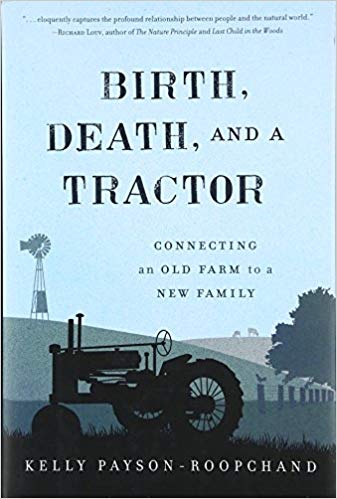
 

Birth, death, and a tractor: connecting an old farm to a new family, by Kelly Payson-Roopchand. This enchanting tale brings to life several generations of a family on a bit of land in Somerville, Maine. Although the land and farm sadly went out of the family, it ended up in the hands of Kelly and her husband Anil, who not only are keeping it going as “Pumpkin Vine Family Farm” but eloquently write about it, and pay tribute to the families who lived there.
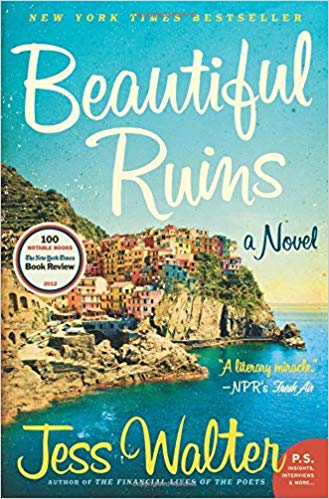
Beautiful ruins: a novel, by Jess Walter. This book came out in 2012, and although I had been intrigued by the cover for the past 7 years, I finally plucked it off the library shelf to indulge in. In this case, you really can judge a book by its cover, as I was entranced throughout the book by the wonderful story, interesting characters, and good writing.


Tired of apologizing for a church I don’t belong to: spirituality without stereotypes, religion without ranting, by Lillian Daniel. This book introduced me to the writings of Lillian Daniel, senior minister at the First Congregational Church in Dubuque, Iowa, whose take on today’s climate of Christianity were so refreshing and humorous that I found myself taking notes. Here’s one of her wonderful quotes: “Anyone can find God alone on a mountaintop. The miracle is that we can find God in the company of other people as annoying as we are.”

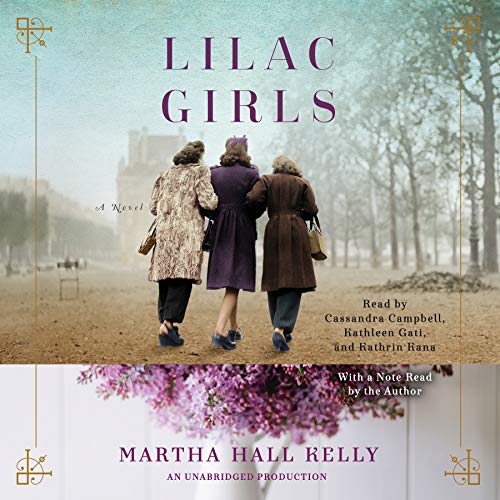
The Alice network, by Kate Quinn. This book, along with “Lilac Girls” by Martha Hall Kelly, were fascinating books written about women during the world wars, based on true stories, which makes them even more wonderful (once again, the power of fiction to educate us). Although grim tales are not my usual choice of fiction, I was glad I read these two amazing books. The Alice Network made me stay up late one evening, as I couldn’t put it down until I finished it


Killers of the Flower Moon: the Osage murders and the birth of the FBI, by David Grann. Once again, a period of history I had no idea about – fascinating on all levels, including the wealth of this Native American tribe, due to the scrappy land in Oklahoma that they settled on which became oil rich in the early 20th century, the Osage women who fell in love with white men (for better or worse), and the research done by the author to uncover more of the story, which haunts these families into the present day.

Sensible shoes: a story about a spiritual journey, by Sharon Garlough Brown. This series of four novels, beginning with this first title, follows the story of four women: Hannah, Meg, Charissa, and Mara, who meet at a retreat center. Well written and paced, I found the journeys of the women to be breathtaking and heartbreaking at the same time, as they struggle deeply with old patterns of living, and try to break free to be the best they can be.

A winter apprentice, by John Holt Willey. This small quiet book is lyrical in Willey’s remembrances of a time of his life, in the 1970s, when he worked at the Paul E. Luke Boatyard in Boothbay Harbor. Cast in a somewhat golden glow, Willey writes with humor and wisdom, about his being an older apprentice, and the Maine characters that populated the scene, teaching him along the way about life.

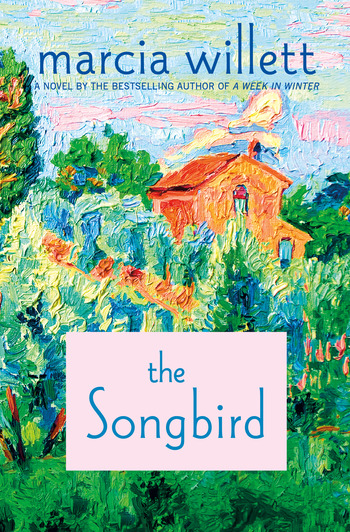
Little French Bistro : a novel, by Nina George. This book, along with Marcia Willett’s The Songbird, were a nice balance to the World War novels mentioned earlier. Although they grapple with serious issues, they offer wonderful escapism into small French and English villages, where people escape to from their lives, and find community (reminiscent of Long Island?)


Northland: a 4,000 mile journey along America’s forgotten border, by Porter Fox. While not the most gripping read, this is a classic travel tale – juxtaposing historical information with the author’s journey, by canoe, freighter, and automobile, across the Canadian border. It starts in our familiar territory of Maine, and ends in the area where my family lives, in Washington State. A great read in today’s political climate.


“Creative cooking with cottage cheese” : cookbooks from the collections of Mary Justice

Most of us who remember Mary Justice probably picture her on the dock of the ferry landing, with her taxi behind her, awaiting the lucky passengers who will get to ride in her taxi, and absorb some local island flavor. Most of us don’t know about her home life, though, and that she was an avid collector of cookbooks, most of which she probably sent away for by mail, given that she rarely left the island.

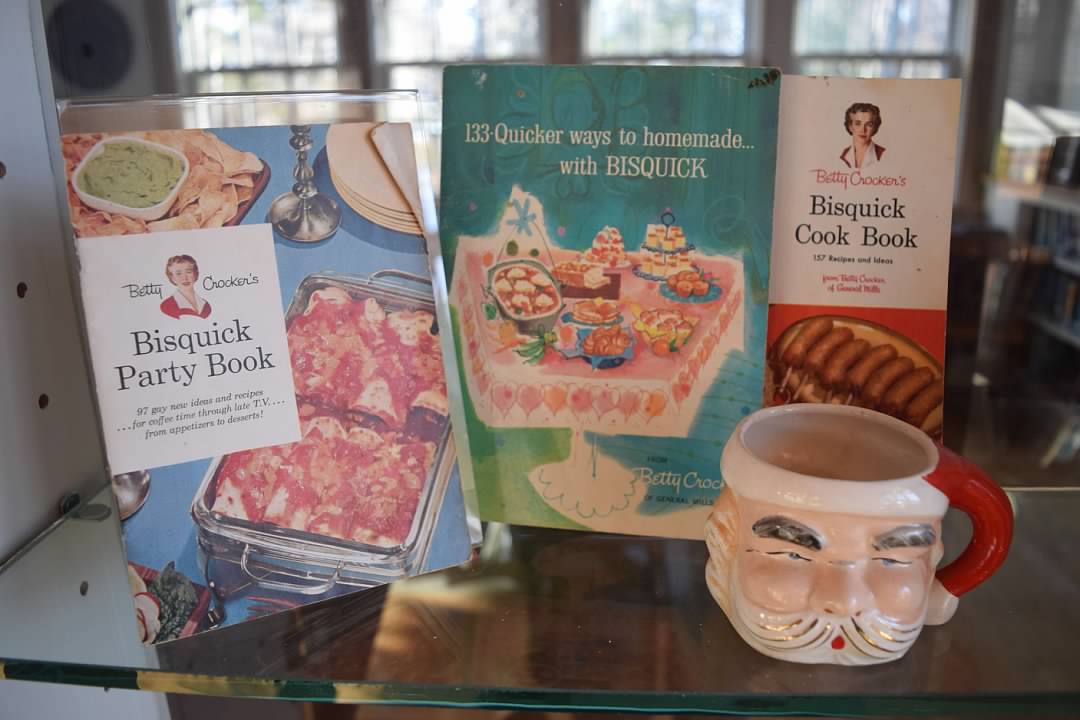
This lovely exhibit, curated by her daughter Marie Harmon, with assistance from Nancy Noble, of her cookbooks showcases the kind of cookbooks that are indicative of the cooking that was done in the mid-20th century, by most “modern” women. There are also books kept by other members of Marie’s family, such as the 1947 edition of Joy of Cooking. This well-loved cookbook shows great signs of being used and loved. The inscription to Marie’s great-aunt Marie reads, “December 25, 1947, To Marie, with loads of love from Jenny and “Muffie” and “it better be good eating from here on in.”

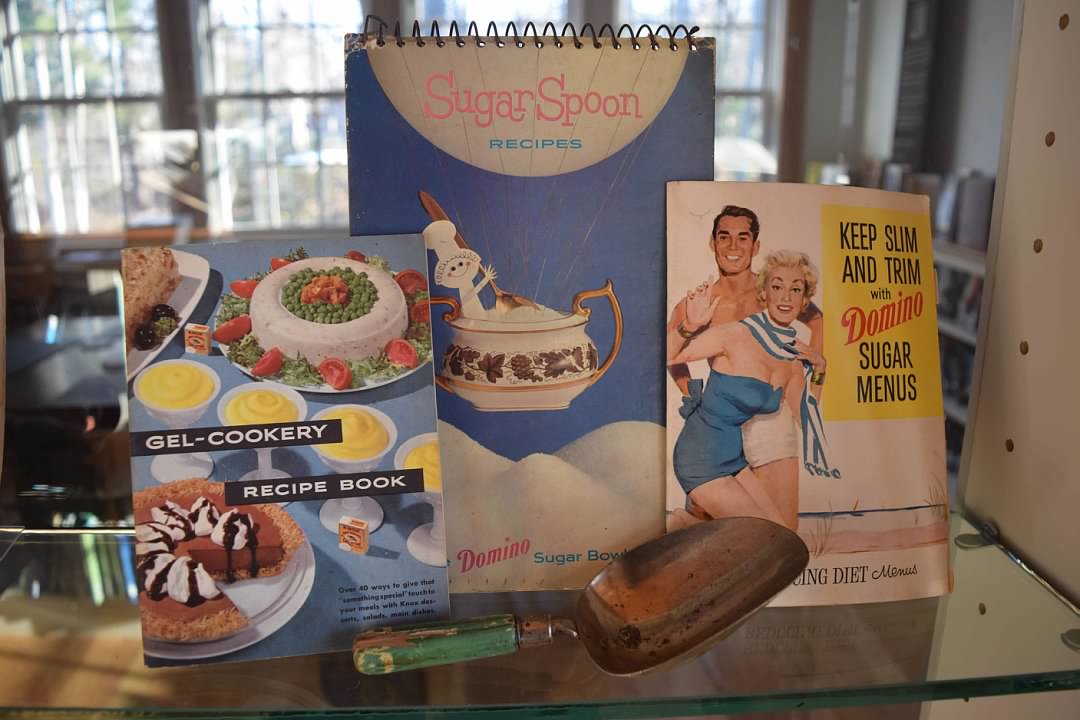
A touch of the Christmas spirit can also be seen in the holiday entertaining accoutrements, such as coasters, napkins, and cups, most still encased in their original plastic packaging. (Antiques Roadshow would approve!). A Santa mug that belonged to either Marie or her sister Ann, as well as a sugar scoop, bring a flavor to what Christmas and baking was like in the Justice household.

There are even a few Maine titles in the collection:
-Maine Rebekah Cookbook (1939)
-Maine Ladies Auxiliary Veterans of Foreign Wars (Mary was a member)
-121 tested recipes made famous with State of Maine canned foods
-Bake shop : prize-winning recipes from Pyrofax Gas : teenage baking contest (Marie’s father sold Pyrofax – the Pyrofax Gas Corporation was located at 917 Main Street in Westbrook).
There are 7 cookbooks from the Culinary Arts Institute about sandwiches, candy, eggs, poultry/game birds, vegetables, cake, and leftovers. There is a wonderful World War II era cookbook about “How to bake by the ration books.”

Many of the books were sponsored and created by various food organizations:
-Creative cooking with cottage cheese (American Dairy Association)
-Recipes from Raisinland (California Raisin Advisory Board)
-All out for a Chick-n-que : cook out recipes (The National Broiler Council)
-Cranberry dishes that children love (National Cranberry Council)
Then there are the companies that encouraged their customers to cook or bake with ingredients that they produced, including Bisquick (Betty Crocker), Domino Sugar, Knox Gelatine Co. (“Gel-cooking recipe book”), Borden (including a label from a can of sweetened condensed milk with recipes on the verso), and Calumet Baking Powder.

Come see these colorful and nostalgic cookbooks, as we enter the holiday season of entertaining for family and friends, and spending more time indoors cooking and baking.

Located in the small exhibit case between the small meeting room and the library. Open during library hours.


The Vanishing American Barn – a fall exhibit at the Long Island Community Library

Just in time for fall, we present to you our newest exhibit at the Long Island Community Library small meeting room glass case.

“The Vanishing American Barn” : plates collected by Flo Brown

Flo has collected many plates, including this lovely series of plates that speak of autumn, as we celebrate the beginning of this season on Long Island. This series is called “The Vanishing American Barn” created by Harris Hien for Historic Providence Mint around 1983. Types of barns include Lancaster, Southern Tobacco, Hudson River, Victorian, New England, Thatched, Log, Appalachian, Buck County, and Round barns.

Come enjoy an exhibit that showcases a Long Islander’s collection.

Open during Library hours

October is National Family History Month

Did you know that October is National Family History Month? Well, in Australia it is! I’d like to take advantage of that fact to remind you that Ancestry.com (AncestryLibrary) is available for free at the Long Island Community Library, using one of the library computers or the Wifi: Ancestry Library Edition Resources. This is a great way to get started on your family history, or try to find that elusive family member (perhaps the black sheep) in your family tree. Genealogy was prominent this summer on Long Island, with the wonderful exhibit that the Long Island Historical Society put on about the Murphy family. Cheryl Nickerson Nutter did a fabulous program about her research for the exhibit, as well as pointing out some great resources. Stay tuned for more genealogy programs in the future!

Gaylord, a source for archival materials, offers “My family history kit” to get you started on housing your family treasures. The Gaylord Archival® My Family History Kit includes all the materials needed to start collecting and recording family history and genealogy. Use the 15-generation pedigree chart to plot your family tree. A helpful brochure provides a starting place for genealogical research and questions to ask in oral history interviews. File folders, envelopes and polypropylene sleeves provide safe storage and organization for photographs and important documents, such as letters and certificates.

As far as my own personal family history, no, I’m not related to anyone on the island. But my mother reminded me that this month both sets of my grandparents were married 100 years ago! Coincidentally, they were married one day a part – my paternal grandparents (Morton and Pansy Noble, see below) in Cleveland, Ohio (at the Old Stone Church) and my maternal grandparents (William and Anna Goudberg) in Grand Rapids, Michigan. And here I am today, working at the Maine Historical Society, and encouraging you to research your family stories.


Revisiting the classics, or old familiar favorites

Have you ever revisited an old familiar favorite book, or a classic that you read years ago as a school assignment? Were your reactions similar to when you first read it, or has the wisdom of the years made you view it differently? For example, this summer’s LICL book group read Edith Wharton’s House of Mirth. One of the group members had read this in high school, 50 years ago, and when she attended her 50th high school reunion, talked to her classmates about the book. I had read this book several years ago as part of another LICL book group (an offshoot of Bo Burke’s classics book group, where some of us decided that women writers weren’t being represented). All I remembered is that the ending wasn’t happy, and rereading it brought the same confirmation. Watching the movie version, though, made for a more visual imprint of the story on my mind.

I also recently reread “Tarzan of the Apes” by Edgar Rice Burroughs, which I had read in my late teenage years. I had loved the first book so much that I ended up reading the entire series (26 books), as all the books were such rip-roaring yarns. Re-reading the first in the series reminded me of how much of a rip-roaring yarn it was, but I also found it to be very melodramatic and somewhat racist. Still, it was fun to read, and we may continue reading more of the series at some point, as the first book is kind of a cliff-hanger (will Tarzan and Jane stay together? Well, we know what happens, but the how makes it intriguing).

It’s not often that I re-read a book, but there are some that stay in my memory, so they are worth reading again. I have searched out books that I read as a child, and if they are well-written, they still bring a thrill to my soul, even if I remember the basic plot.

What are some books that you have reread recently, or just books that you return to from time to time?

Authors on the Bay: Steven English

For those of you who regularly ride down the bay, you may have been intrigued to see a young man with earphones constantly scribbling notes into a notebook, and wondered what he was up to. Well, I would like to introduce you to Steven English, a writer who lives at Diamond Cove. You may have also seen him at Andy’s, the waterfront waterhole for many islanders, where he has worked the past 6 years as a server. But his true passion is writing, and he finds living on Casco Bay to be a perfect setting for this author. Originally from Edison, New Jersey, where his “Class of 85” series takes place (name changed to “Whitfield”), Steve has been writing since he was young, but started his “Class of 85” series in 1999. Written in diary form, these books take place in high school years, and show the different lives and perspectives of high schoolers. There are 5 books published, with 1 or 2 more in the works. Steve self-publishes his books through Amazon and Kindle, which has a paperback division.

Living on an island and commuting by ferry to work allows him the chance to really relax and slow down, and write. When he’s not on the island or working, you can find him at any of the many cafes in Portland, enjoying coffee while absorbing conversations around him, which gives him inspiration and ideas. Steve does not lack in ideas – he has many thoughts in his head. They start there, and then he hand writes them in his notebooks. From there he puts them on computer, and edits, edits, edits. While most of his books take place in 80s New Jersey, he also has some other themes in his books, such as time travel. He does have an idea for a book that takes place in Casco Bay, so stay tuned for that one! In the meantime, Steve says to his fellow island community, “Keep reading!” And he would also love feedback on any of his current books.

A small library on an island on the coast of Maine